HEALEAZ Wound Cleanser


Cleanse the Wound.
Support the
Healing Process.
HEALEAZ is the antimicrobial wound cleanser at the core of the BioFactor Wound Hygiene Program by Customicro Clinical Services — formulated in the USA to balance pH, remove biofilm, and promote faster healing.
The Triple Approach to Wound Hygiene
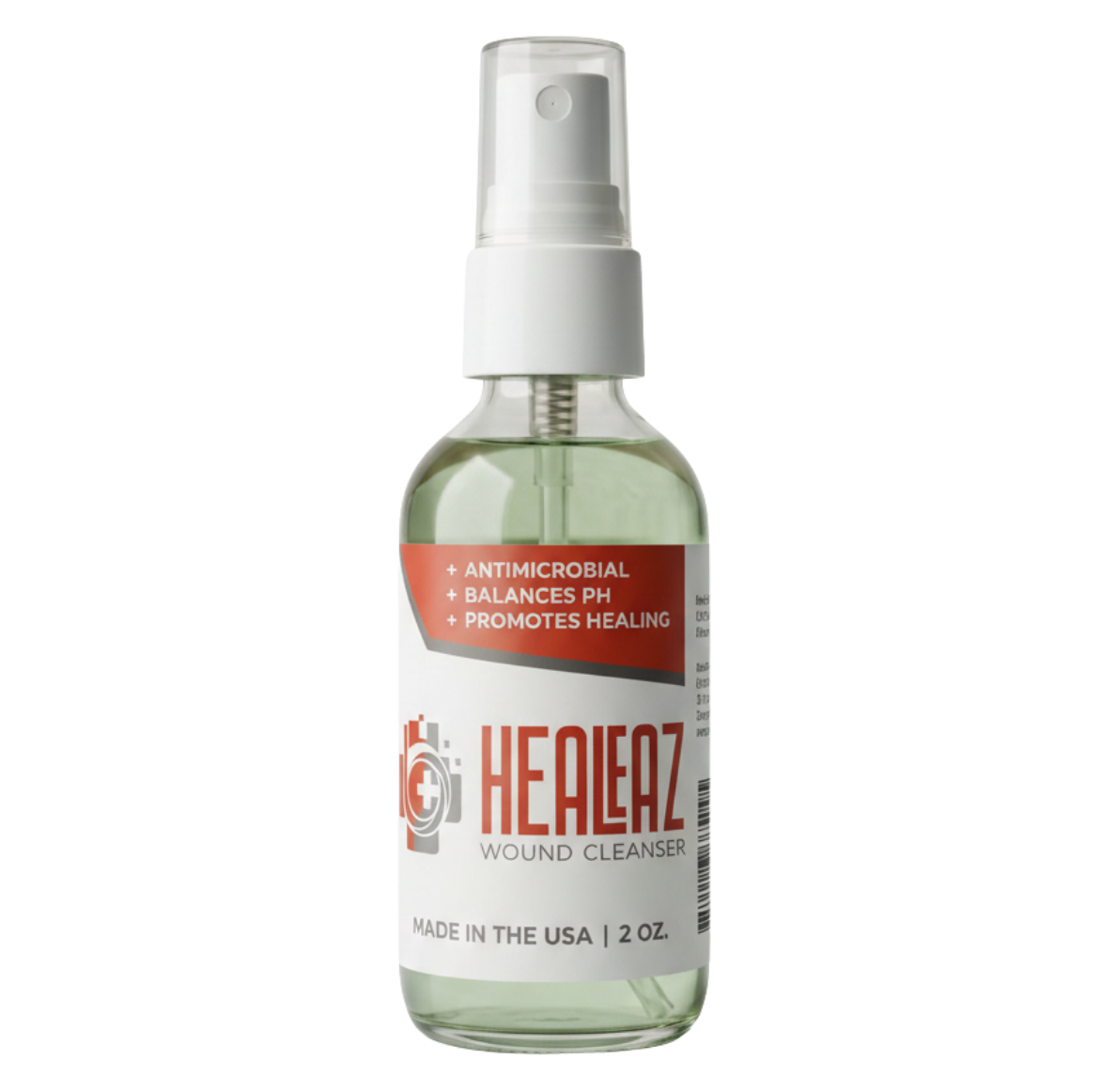
HEALEAZ is a premium antimicrobial wound cleanser that provides scientifically-proven efficacy for wound healing in an easy-to-use spray format, designed to meet the rigorous standards of every care setting.
Antimicrobial
HEALEAZ delivers broad-spectrum antimicrobial action that targets the pathogens most commonly found in chronic and hard-to-heal wounds, including those protected by biofilm.
Balances pH
By restoring the wound's optimal pH environment, HEALEAZ supports the natural healing cascade and reduces conditions that allow biofilm and resistant organisms to thrive.
Promotes Healing
Used as part of the BioFactor Wound Hygiene Program, HEALEAZ helps create the clean wound bed necessary for tissue regeneration, reduced exudate, and measurable clinical improvement.

Target Biofilm at the Source
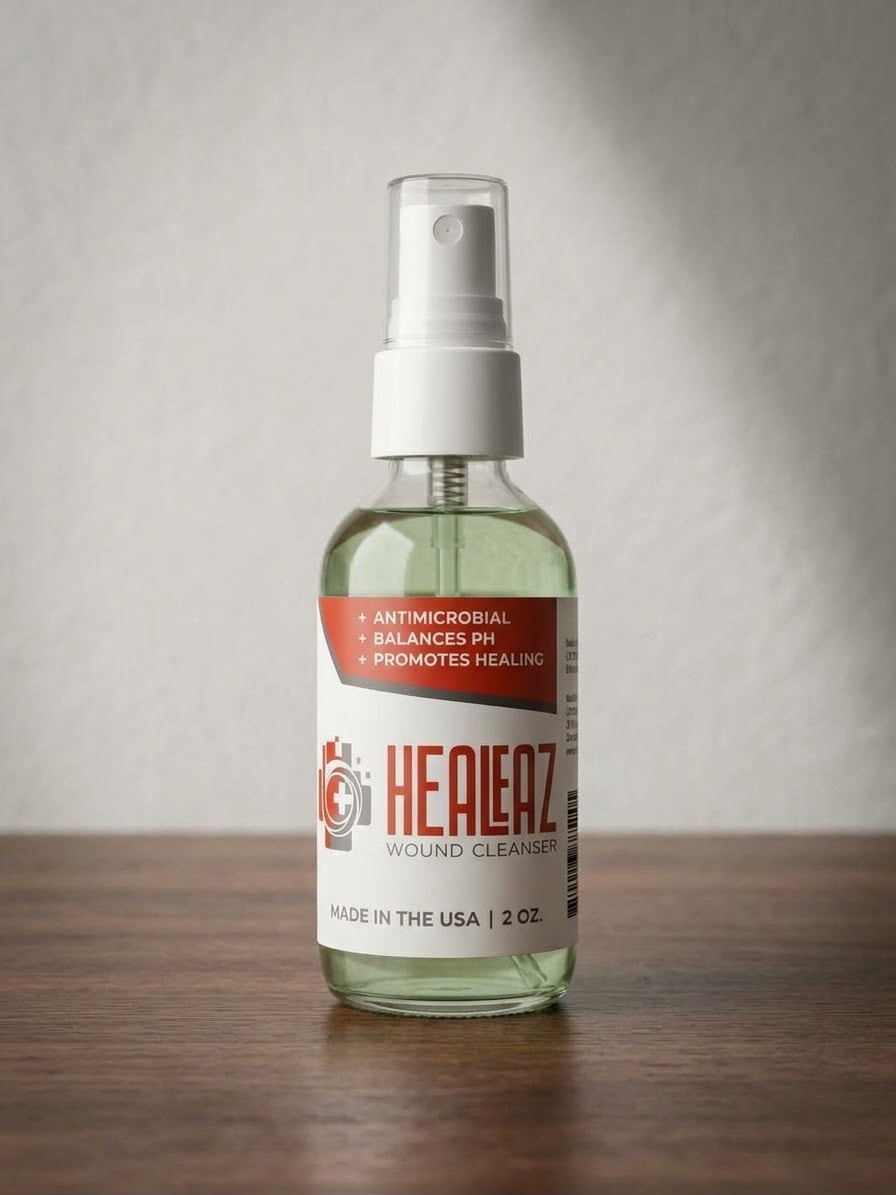
Most wound cleansers, including common OTC products, only address surface bacteria. HEALEAZ is formulated to go deeper, penetrating and disrupting the biofilm matrix that shields chronic wound pathogens from standard treatment.
Powered by QBX technology, HEALEAZ also actively down-regulates the destructive MMPs (Matrix Metalloproteinases) that stall wound healing — something no standard antiseptic or OTC cleanser is designed to do. The result is a wound environment that is cleaner, more balanced, and biologically ready to close.
- +Penetrates and disrupts biofilm, not just surface bacteria
- +Rebalances wound MMPs to restore the healing cascade
- +Biocompatible, no-rinse formula safe for all wound types
- +90.4% complete healing rate vs. 48.5% with standard care
A Systematic Approach to Wound Chronicity
The Customicro Clinical Services recommends patients all with wounds receive standardized wound assessment, therapeutic cleansing, assessment for debridement, wound-edge management, appropriate dressing selection, and treatment of the underlying wound etiology. Wounds demonstrating delayed healing, recurrent deterioration, or suspected biofilm receive an enhanced antibiofilm/wound-hygiene strategy, the BioFactor Wound Hygiene Program.
Perform wound hygiene at every dressing change, with the intensity and components individualized according to wound status, tissue viability, infection risk, patient tolerance, and clinician assessment.
A 2024 real-world study evaluated the four-step protocol — cleanse, debride, refashion, dress — in hard-to-heal wounds. Moderate/high exudate fell from 69% at baseline to 25%, suspected biofilm from 79% to 18%, and suspected local infection from 43% to 3% at final assessment.
Murphy C, et al. Real-world evaluation of a wound hygiene protocol in hard-to-heal wounds. J Wound Care. 2024;33(5):304. doi:10.12968/jowc.2024.33.5.304
Therapeutic Cleansing
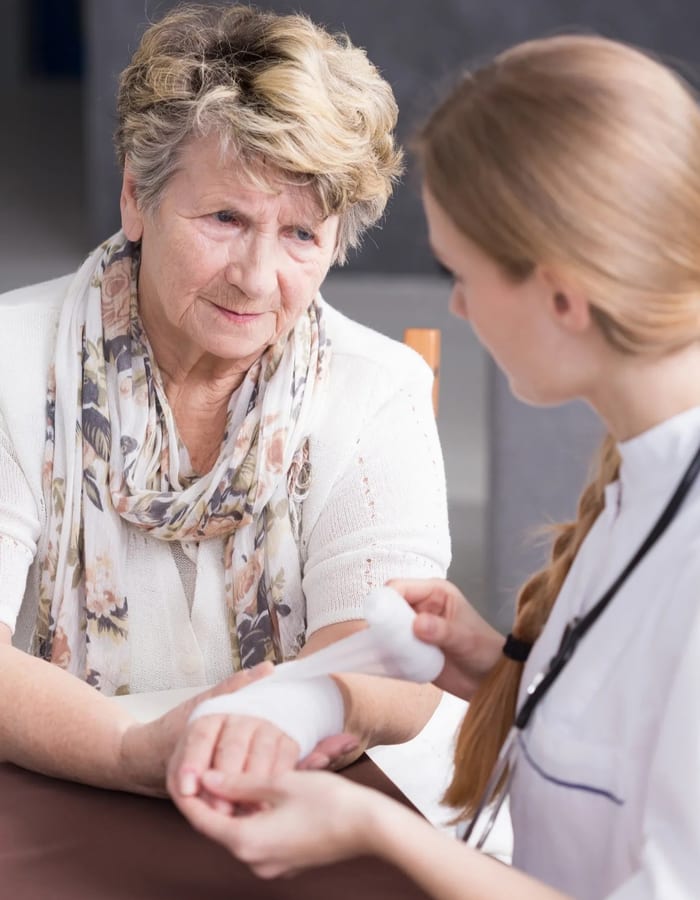
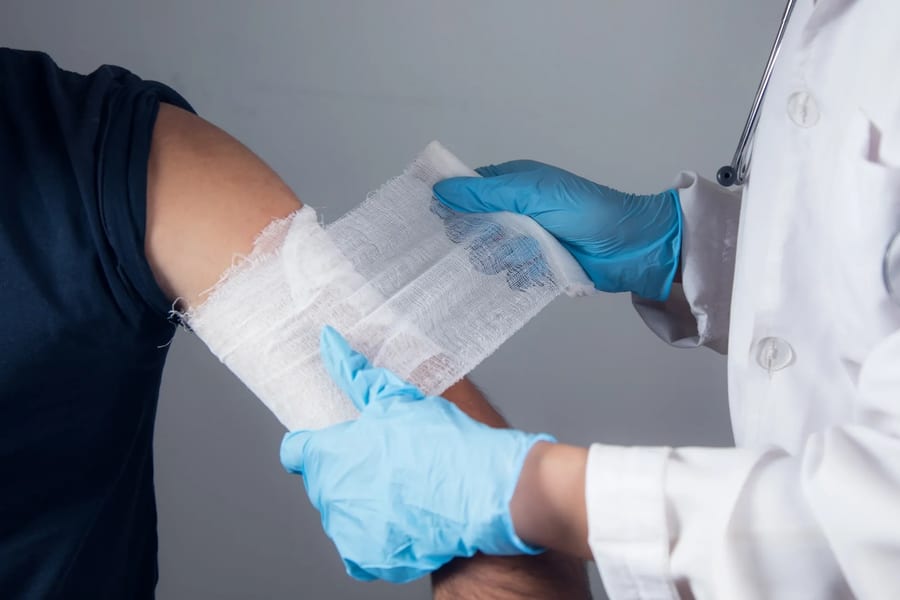
The 2025 IWII cleansing consensus defines therapeutic wound cleansing as an active clinical intervention — not simply a ritual — and recommends addressing four zones:
- +Wound bed
- +Wound edge
- +Periwound
- +Surrounding skin
It specifically emphasizes appropriate technique, solution, sequencing, and sufficient effort to remove contaminants, loose debris, nonviable material and microorganisms.
International Wound Infection Institute (IWII). Wound Cleansing Consensus 2025. Wounds International, 2025.
Practical Protocol
At each dressing change:
- Remove the previous dressing carefully.
- Assess the wound before disturbing it.
- Cleanse surrounding skin/periwound.
- Cleanse wound edges.
- Irrigate/cleanse the wound bed adequately.
- Remove loose debris, exudate and nonviable material.
- Avoid unnecessarily traumatic scrubbing of viable tissue.
- Use a solution appropriate to the wound and clinical situation.
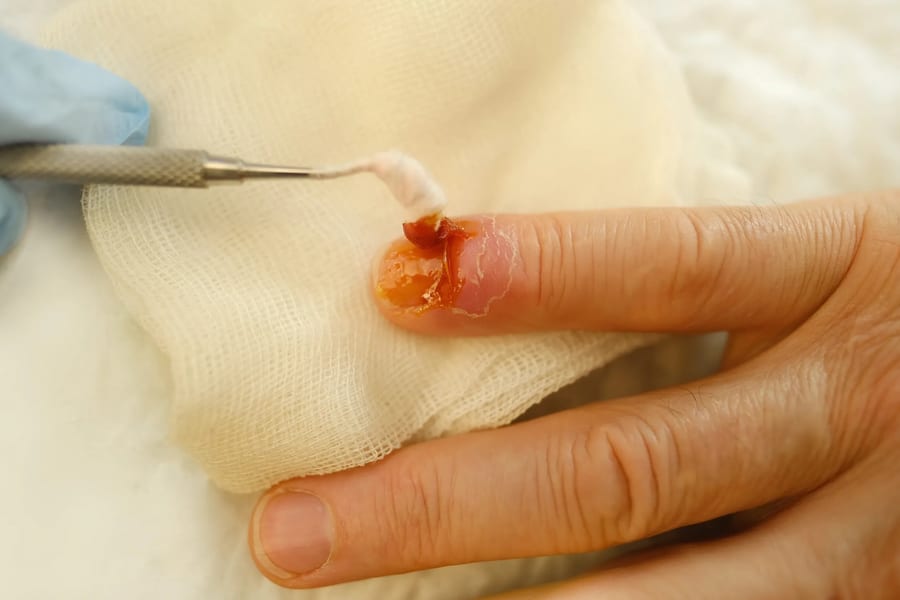
Debridement
Current consensus supports debridement as an important method of removing:
- +Necrotic tissue
- +Slough
- +Foreign material
- +Devitalized tissue
- +Surface biofilm/bioburden
The 2024 international debridement consensus specifically states that debridement should be performed by an appropriately trained and competent healthcare professional, with competencies and scope defined by the jurisdiction and organization.
Atkin L, et al. Implementing TIMERS: the race against hard-to-heal wounds. J Wound Care. 2019;28(Sup3a):S1–S50. doi:10.12968/jowc.2019.28.Sup3a.S1
Program Standard
Every chronic/hard-to-heal wound is assessed for the need for debridement at every dressing change. The method depends on:
- +Wound etiology
- +Tissue involved
- +Perfusion
- +Infection
- +Pain
- +Bleeding risk
- +Anatomical location
- +Clinician competency
- +Patient goals
- +Care environment
Possible Methods Include
- +Conservative sharp
- +Surgical/sharp
- +Mechanical
- +Autolytic
- +Enzymatic
- +Biological
- +Ultrasonic/other advanced techniques where indicated
Elraiyah T, et al. The evidence base for debridement of the diabetic foot: a systematic review. J Vasc Surg. 2016;63(2 Suppl):29S–37S. doi:10.1016/j.jvs.2015.10.002
Important Exception
Do not automatically debride stable, dry heel eschar or ischemic tissue without first determining perfusion and clinical indication.
Biofilm Management
This is where the modern Wound Hygiene concept differs from older wound cleansing protocols. Biofilm should be considered particularly when a wound is:
- +Stalled
- +Recurrently deteriorating
- +Producing persistent exudate
- +Repeatedly infected
- +Not responding as expected to appropriate treatment
- +Demonstrating recurrent slough/debris despite routine care
The foundational biofilm consensus concluded that debridement is important but does not completely eradicate biofilm, and that biofilm can reform rapidly. Therefore, repeated disruption plus appropriate local antimicrobial/antibiofilm management may be necessary.
Malone M, et al. The prevalence of biofilms in chronic wounds: a systematic review and meta-analysis of published data. J Wound Care. 2017;26(1):20–25. doi:10.12968/jowc.2017.26.1.20
The 2024 clinical review similarly describes wound hygiene as an early antibiofilm strategy combining cleansing, debridement, and antimicrobial approaches.
Schultz G, et al. Wound bed preparation and a brief history of TIME. Int Wound J. 2004;1(1):19–32. doi:10.1111/j.1742-4801.2004.00008.x
Antimicrobial Stewardship
Do not equate biofilm with clinical infection. A wound can contain microorganisms/biofilm without requiring systemic antibiotics. Antibiotics should be reserved for appropriately diagnosed infection, and topical antimicrobials should have a defined clinical indication rather than being automatically applied to every wound. The IWII 2022 consensus explicitly incorporates antimicrobial stewardship into wound-infection management.
International Wound Infection Institute (IWII). Wound Infection in Clinical Practice: Principles of Best Practice. Wounds International, 2022.
Refashion / Prepare the Wound Edge
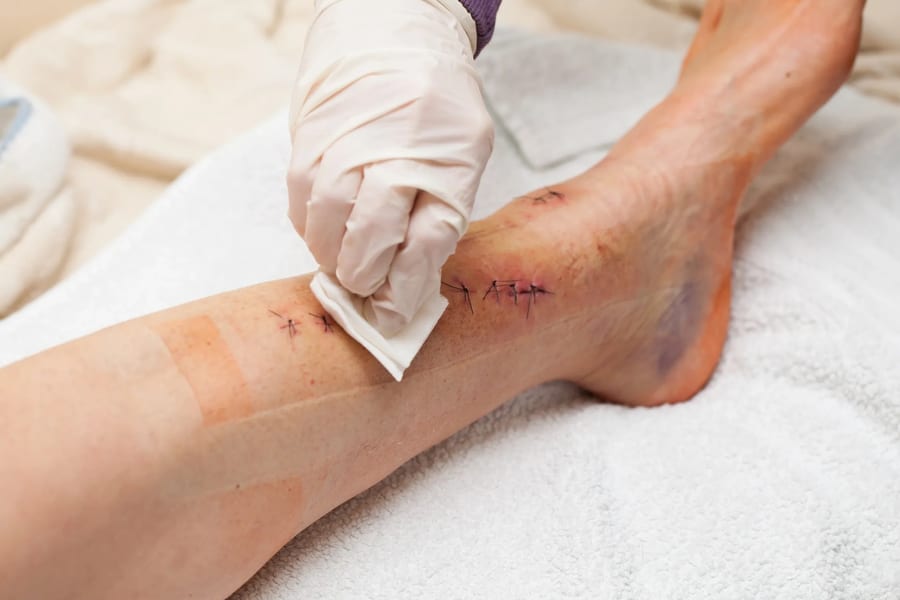
This is the third component of the Wound Hygiene model and is often omitted from conventional protocols. The objective is to address:
- +Rolled/epibole edges
- +Hyperkeratotic tissue
- +Callus
- +Nonviable edge tissue
- +Debris that prevents epithelial migration
- +Maceration
- +Excess moisture
For diabetic/neuropathic wounds, callus removal and pressure redistribution are particularly important.
For venous wounds, edge management has to occur alongside compression and edema control.
For arterial wounds, aggressive edge/tissue debridement should not occur without appropriate perfusion assessment.
The overall concept is consistent with modern wound-bed preparation: tissue + infection/inflammation + moisture balance + wound edge.
Malone M, et al. The prevalence of biofilms in chronic wounds: a systematic review and meta-analysis of published data. J Wound Care. 2017;26(1):20–25. doi:10.12968/jowc.2017.26.1.20
Sibbald RG, et al. Preparing the wound environment: debridement, bacterial balance, and moisture balance. Ostomy Wound Manage. 2000;46(11):14–22.
Dress According to Wound Needs
Dressings should be selected according to:
- +Exudate level
- +Tissue type
- +Infection/inflammation status
- +Wound depth
- +Periwound condition
- +Dressing-change frequency
- +Patient tolerance
- +Cost/resource considerations
- +Ability to maintain a moist — not excessively wet — wound environment
There should not be a single "standard dressing" for every wound. A useful formulary approach is to create categories:
| Wound Problem | Dressing Objective |
|---|---|
| High exudate | Absorb and manage moisture (foam, alginate, hydrofiber) |
| Dry/necrotic wound | Rehydrate and promote autolysis (hydrogel, hydrocolloid) |
| Infected/critically colonized | Antimicrobial dressing (silver, iodine, PHMB, honey) |
| Granulating wound | Protect and support granulation (low-adherent, foam) |
| Epithelializing wound | Protect fragile new tissue (thin film, low-adherent) |
| Malodorous wound | Odor management (charcoal, antimicrobial) |
Infection Pathway
| Status | Actions |
|---|---|
| Contamination / Colonization |
|
| Critical Colonization / Local Infection |
|
| Spreading Infection / Systemic Signs |
|
International Working Group on the Diabetic Foot (IWGDF). IWGDF Guidelines on the Prevention and Management of Diabetic Foot Disease. 2023.
We're here to help.
Our licensed pharmacists and our team are always available to answer your questions about HEALEAZ Wound Cleanser. Reach out by phone or email.
We welcome the opportunity to partner with healthcare providers who are looking to offer their patients high-quality and customized wound care. Whether you're interested in learning more about HEALEAZ or establishing a referral relationship, our pharmacists are here to collaborate. Please reach out to us directly — we'd love to connect and support your patients together.
Contact Us